
BLOG
A Complete Guide to Maintaining Timber Decks, Pergolas and External Carpentry in Moorabbin and Melbourne's Bayside Suburbs
Timber remains one of the most popular building materials for outdoor structures across Moorabbin and Melbourne's bayside suburbs. Decks, pergolas, timber screening, handrails and exterior trims provide both practical and aesthetic value, but they are constantly exposed to sun, wind, rain and changing temperatures.
Properties located near Port Phillip Bay face additional challenges due to salt-laden air, increased moisture exposure and fluctuating weather conditions. Understanding how these factors affect timber can help property owners identify issues early and maintain outdoor structures in good condition for longer.
How Bayside Conditions Affect External Timber
The environment has a significant impact on timber performance. Homes throughout Moorabbin, Brighton, Beaumaris and surrounding suburbs experience a combination of intense summer UV exposure, winter rainfall and coastal air.
Ultraviolet radiation gradually breaks down protective coatings and causes timber surfaces to dry out. As timber loses moisture, it can shrink, crack and become more susceptible to water penetration.
Coastal air presents another challenge. Salt particles carried by wind can settle on exposed surfaces and accelerate wear of finishes, fasteners and connectors. Areas that receive limited sunlight may remain damp for longer periods, increasing the likelihood of mould growth and timber deterioration.
Regular inspection allows property owners to identify these issues before they become structural concerns.
Common Signs Your Deck or Pergola Needs Attention
Timber deterioration rarely occurs overnight. In most cases, warning signs appear gradually and become more noticeable over time.
Surface cracking is one of the earliest indicators that timber may require maintenance. While minor cracking can occur naturally, deeper splits may allow water to enter the timber and contribute to long-term damage.
Discolouration is another common issue. Timber that has turned grey often indicates prolonged UV exposure and weathering. While this does not always affect structural performance, it signals that protective coatings may have deteriorated.
Property owners should also watch for:
Soft or spongy sections of timber
Loose boards or handrails
Rusting fixings and brackets
Visible mould or mildew
Movement in structural members
Water pooling on deck surfaces
Any of these signs warrant closer inspection to determine whether maintenance or repairs are required.
Why Protective Coatings Require Ongoing Maintenance
Paints, stains and oils act as the primary defence against moisture and UV damage. These finishes gradually wear down due to weather exposure and foot traffic.
Decking oils penetrate the timber and help reduce moisture absorption while enhancing the natural appearance of the timber grain. Stains provide additional colour protection and can improve resistance to UV degradation.
The lifespan of a coating depends on several factors, including timber species, exposure levels and maintenance practices. Highly exposed decks often require more frequent attention than sheltered structures.
Before reapplying any finish, timber surfaces should be properly cleaned and allowed to dry. Dirt, mould and old coatings can prevent new products from bonding effectively.
Regular maintenance of protective coatings is often more cost-effective than addressing advanced timber deterioration.
Areas That Are Commonly Overlooked
Many maintenance issues develop in locations that are not routinely inspected.
The underside of decks often traps moisture due to limited airflow. Leaves, soil and debris can accumulate beneath structures and create conditions that promote decay. Maintaining adequate clearance and ventilation beneath decks can help reduce moisture-related problems.
Pergola posts are another area that deserves attention. Posts installed near garden beds or lawn areas may experience prolonged contact with moisture. Checking these locations for signs of movement, splitting or decay can help identify problems before structural integrity is affected.
Connections between timber and metal components should also be inspected regularly. Fasteners, brackets and bolts may corrode over time, particularly in coastal environments.
Gutters and downpipes located near timber structures can also contribute to damage if leaks develop and direct water onto exposed timber surfaces.
Creating a Long-Term Maintenance Schedule
A structured maintenance approach helps property owners stay ahead of common issues.
Visual inspections should be carried out at least twice each year, particularly after winter rainfall and before summer heat arrives. Cleaning decks and pergolas removes debris that can trap moisture and contribute to staining or mould growth.
Protective coatings should be monitored for signs of fading, peeling or uneven wear. Areas exposed to direct sunlight typically deteriorate faster than shaded sections.
Any signs of loose fixings, timber movement or water damage should be investigated promptly. Small repairs are generally easier to address than widespread deterioration that has been left unattended.
With regular inspections and appropriate maintenance, timber decks, pergolas and external carpentry features can continue to perform well despite the demanding conditions experienced throughout Melbourne's bayside region.
DISCOVER WHAT OUR CUSTOMERS HAVE TO SAY ABOUT US
REVIEWS
REVIEW US ON GOOGLE
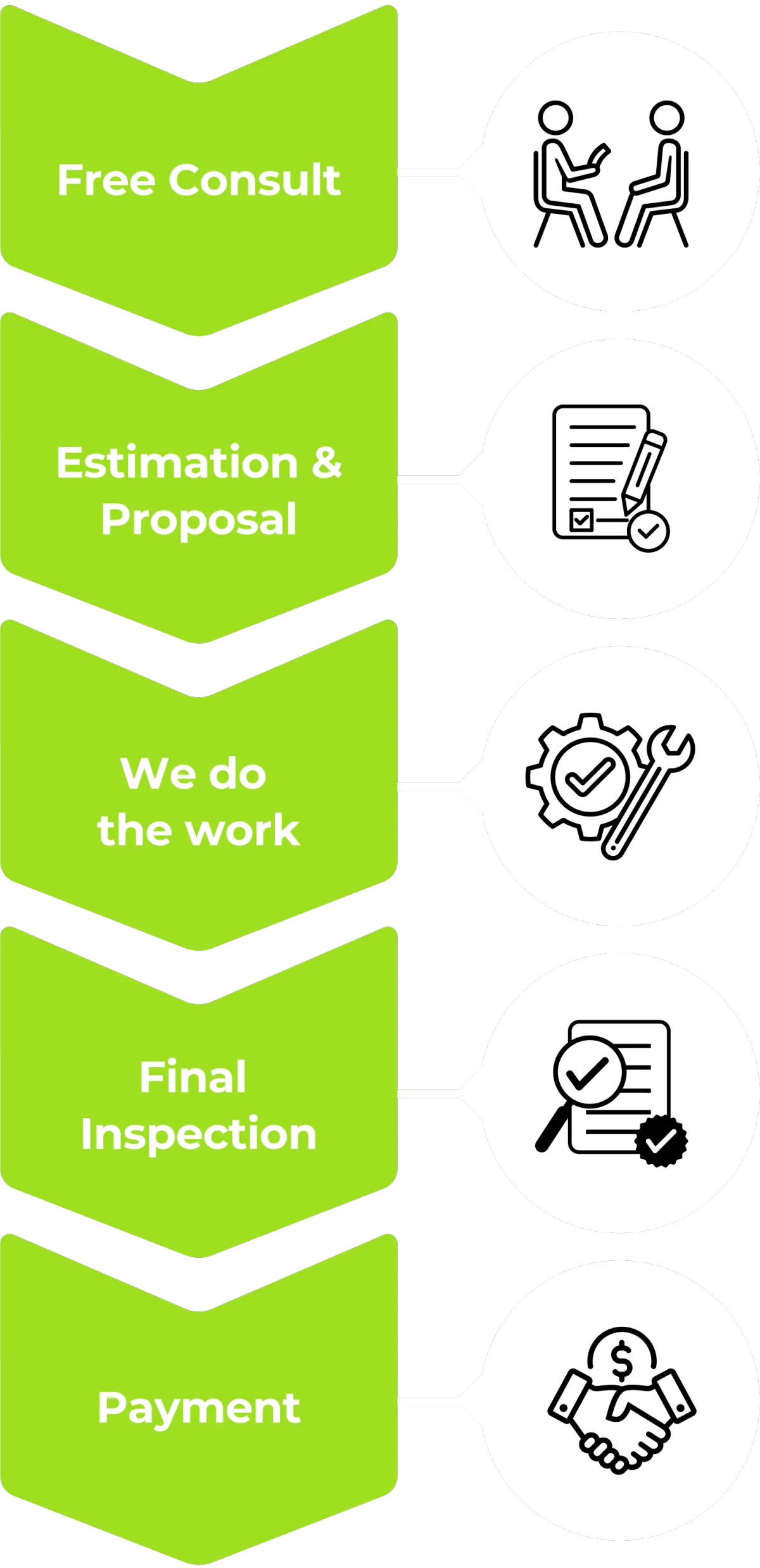
our process
Our process is simple and only contains a few simple steps

READY TO take the next step?
get a free quote TODAY!